Parental Leave Request
Request parental leave with the dates that matter: the due or placement date, planned start and end, shared leave, pay arrangements and a return plan.
A ready-to-use human resources form for HR, people ops and hiring managers: 30 questions, 3 pages, 5 conditional rules.
- Questions
- 30
- Pages
- 3
- Layouts
- classic
- Time to complete
- ≈ 10 min
- Conditional rules
- 5
Searches this template answers
- parental leave request form
- maternity leave request form template
- paternity leave application form
- shared parental leave notification form
- adoption leave request form
Also filed under
Live preview and test console
This is the real form. Answer it to test the flow — nothing is sent or stored.
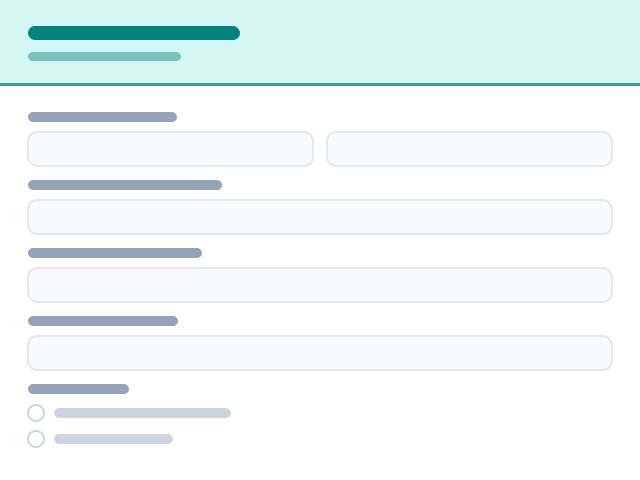
Page 1 of 3 — Dates and type of leave
This template runs as a straight sequence — no branching rules.
Compliance checklist
- Payment items priced — passingEvery payment question charges a real amount, so a submission always records a payment.
- Conditional logic resolves — passingEvery rule points at a question or page that exists in this template.
- Legal text not required — passingThis template collects neither health nor regulated financial information.
- Question labels unique — passingLogic and exports address questions by label, so duplicates are ambiguous.
What happens after submit: nothing is stored in this preview. On your own copy, every response triggers an instant email notification and lands in your response dashboard, ready to export or forward.
Happy with it? Take a copy into your workspace — every question, rule and setting comes with it.
Who this template is for
Parental Leave Request is built for HR, people ops and hiring managers who need to run hiring and internal people processes on one auditable record.
- HR, people ops and hiring managers working in human resources.
- Teams who need to run hiring and internal people processes on one auditable record without writing code or paying for a custom build.
- Anyone replacing CVs, requests and approvals scattered across inboxes with one structured record per enquiry.
- Respondents are candidates and employees — the form asks them 30 questions across 3 screens.
Why this form is useful
It removes the cost of CVs, requests and approvals scattered across inboxes and turns each submission into a record your team can act on immediately.
- 20 questions are required, so submissions arrive complete instead of needing a follow-up email.
- It accepts a document or photo upload as evidence.
- It records a signature you can keep as proof of agreement.
- It pins the request to a specific date.
- It captures a numeric value you can filter and sort on.
- Conditional logic hides 5 questions until they are relevant — shorter forms convert better than long ones.
- Splitting the form across 3 pages keeps each screen short and shows respondents how much is left.
- Every response is stored, searchable and exportable, so nothing depends on one person's inbox.
How to use this template
From copy to live form is a few minutes of work, and every step is reversible.
- 1Press “Use this template” — a fresh copy of Parental Leave Request lands in your workspace, ready to edit.
- 2Rename or delete any question, and change what is required. Nothing here is fixed.
- 3Open Notifications and add the email addresses that should be alerted on each submission; add an auto-reply to the respondent if the form collects an email address.
- 4Check the upload limits on the file question so respondents can attach what you actually need.
- 5Publish it, then either share the link directly or paste the embed snippet into your site — the embedded form resizes to fit and loads no marketing or advertising trackers.
- 6Watch responses land in Submissions, where you can filter, label and export them to CSV or PDF.
Logic and conditions blueprint
Exactly how this form behaves as it is answered — 5 conditional rules ship with it.
- Features conditional validation: if “Which leave are you taking?” is Adoption leave, “Placement or matching date” becomes mandatory before the form can be sent.
- Features conditional validation: if “Are you sharing leave with a partner?” is Yes, “Partner's employer and the weeks they plan to take” becomes mandatory before the form can be sent.
- Features conditional validation: if “Do you plan keeping-in-touch days?” is Yes, “How many days you expect” becomes mandatory before the form can be sent.
- Features conditional validation: if “Do you expect to request a different working pattern on return?” is Yes, “The pattern you have in mind” becomes mandatory before the form can be sent.
- Features conditional validation: if “Is this a multiple birth or more than one child?” is Yes, “Number of children” becomes mandatory before the form can be sent.
- All 5 rules are editable in the Logic tab, and the built-in checker warns about rules that contradict each other.
About this template
Parental leave is not a long holiday, and a general time-off form loses everything that makes it different: a due or placement date the leave is anchored to, notice periods measured in weeks before that date, pay that steps down over time, and a return that has to be planned months ahead. This form is built around those dates. The first page records the expected due date or the placement or matching date for an adoption, the type of leave being taken, the planned first day of leave and the intended last day, and the date the employee is giving notice — the field a payroll audit always asks for. The second page covers pay and entitlement: continuous service, whether statutory or enhanced pay applies, any pay-in-advance arrangement, and whether leave is being shared with a partner, including the partner's employer and the weeks each intends to take. The third page is the return plan: keeping-in-touch days, a phased return, whether the employee expects to request a different working pattern afterwards, and who covers the role while they are away. Nothing here is legal advice, and the form says plainly that entitlement depends on where the employee works and how long they have been employed.
What this form asks
Every question is editable — rename it, make it optional, or delete it entirely.
Page 1 — Dates and type of leave
- Your namerequired
- Job titlerequired
- Team or departmentrequired
- Payroll or employee number
- Which leave are you taking?required
- Expected due daterequired
- Placement or matching date
- Is this a multiple birth or more than one child?required
- Number of children
- Planned first day of leaverequired
- Intended last day of leaverequired
- Date you are giving this noticerequired
- Supporting document, if you have one
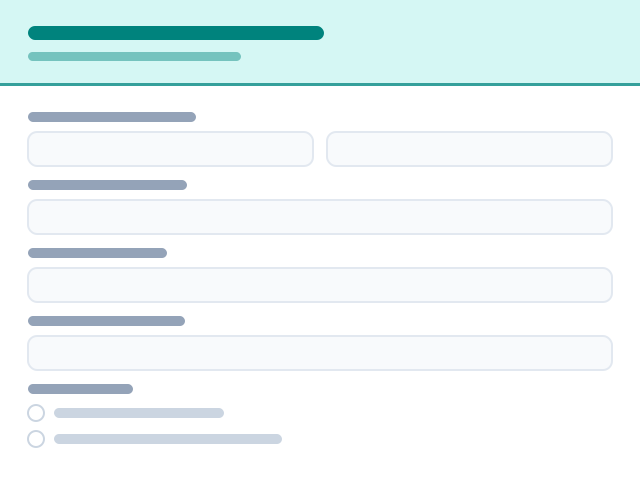
Page 2 — Pay and entitlement
- Date your continuous employment startedrequired
- Which pay arrangement do you expect?required
- Are you sharing leave with a partner?required
- Partner's employer and the weeks they plan to take
- Do you want to use holiday alongside your leave?required
- Days of holiday you would like to use
- Anything payroll should know about your pay arrangement
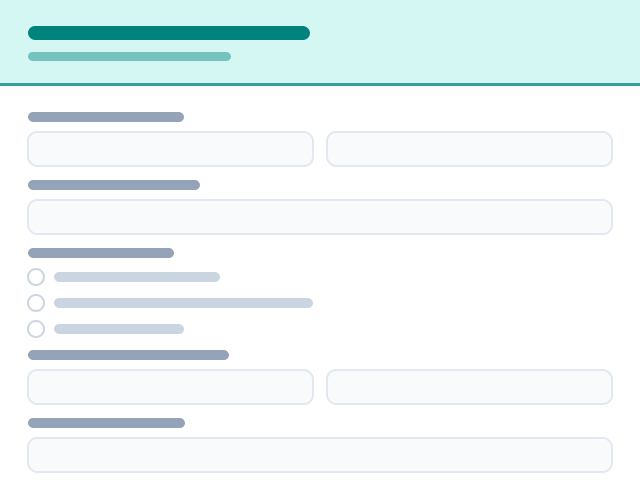
Page 3 — Return plan and cover
- Do you plan keeping-in-touch days?required
- How many days you expect
- How would you like to return?required
- Do you expect to request a different working pattern on return?required
- The pattern you have in mind
- Handover notes and who could cover your workrequired
- Best contact method while you are away
- May we contact you during leave about pay or benefits?required
- Your signaturerequired
- Date submittedrequired
30 questions in total.
Example of a completed parental leave request form
This shows how an employee records the key dates and pay questions a parental leave request turns on.
- Which leave are you taking?
- Maternity leave
- Expected due date
- 14 June 2026
- Planned first day of leave
- 18 May 2026
- Intended last day of leave
- 17 May 2027
- Date you are giving this notice
- 2 February 2026
- Which pay arrangement do you expect?
- Statutory pay
- Are you sharing leave with a partner?
- No
- Do you plan keeping-in-touch days?
- Yes
- How would you like to return?
- Phased return over a few weeks
Sample data — no real people, addresses or records are shown.
How the form changes as it's filled in
This template ships with 5 conditional rules, grouped into 5 behaviours driven by 5 questions. Everything below is already set up — edit or delete any rule once the template is in your workspace.
Driven by “Which leave are you taking?”
- Makes answers required
If “Which leave are you taking?” is Adoption leave, “Placement or matching date” becomes required before the form can be submitted.
Driven by “Are you sharing leave with a partner?”
- Makes answers required
If “Are you sharing leave with a partner?” is Yes, “Partner's employer and the weeks they plan to take” becomes required before the form can be submitted.
Driven by “Do you plan keeping-in-touch days?”
- Makes answers required
If “Do you plan keeping-in-touch days?” is Yes, “How many days you expect” becomes required before the form can be submitted.
Driven by “Do you expect to request a different working pattern on return?”
- Makes answers required
If “Do you expect to request a different working pattern on return?” is Yes, “The pattern you have in mind” becomes required before the form can be submitted.
Driven by “Is this a multiple birth or more than one child?”
- Makes answers required
If “Is this a multiple birth or more than one child?” is Yes, “Number of children” becomes required before the form can be submitted.
Set it up step by step
- 1
Anchor everything to the due or placement date
Notice windows and pay periods are counted from that date, so it belongs on the first page and never in a comment box.
- 2
Record the notice date
The date the employee told you is what a payroll or compliance review asks for months later.
- 3
Ask about shared leave early
A partner's weeks change your cover plan and the pay calculation, and are hard to unpick once leave has started.
- 4
Plan the return at the start
Keeping-in-touch days and a phased return are far easier to agree now than in the week before someone comes back.
Mistakes to avoid
- Using a general time-off form, which captures no due date, no notice date and no pay arrangement.
- Recording only a start date, so nobody knows when cover ends or when the return conversation should begin.
- Stating entitlement as fact on the form when it depends on the employee's location and length of service.
What it pairs with
Most teams don't run this form on its own. These are the forms and systems it sits next to.
What to do with the responses
Acknowledge the notice with its date, confirm the pay arrangement in writing, book the cover, and diarise the keeping-in-touch and return conversations.
Works in this layout
Forms that overlap this one
These pages cover the same subject ground as the parental leave request, matched on the words people actually search for.
Leave Request Form
employeeemploymenthiringhrhuman
Quick Leave Request
employeeemploymenthiringhrhuman
Time Off Request Form
administratorarrangementdateemployeeemployment
Flexible Working Request
adviserapplicationemployeeemploymenthiring
Internal Transfer Request
applicationdateemployeeemploymenthiring
Overtime Authorisation
administratoremployeeemploymenthiringhr
Privacy & compliance
This form holds employee or applicant data. Route it to a named HR mailbox rather than a shared inbox, and keep the audit trail on so you can show who viewed each response.
Frequently asked questions
Does this tell an employee what they are entitled to?
No. Entitlement depends on local law and length of service. The form collects the facts so your adviser or payroll can confirm entitlement.
Why is a general leave form not enough?
Parental leave turns on a due or placement date, a notice date and stepped pay, none of which a holiday form records.
Can it cover shared parental leave?
Yes. It asks who the partner's employer is and which weeks each parent plans to take, so the two schedules can be reconciled.
Is a certificate required to submit it?
The upload is optional at this stage, so a request is never blocked while a certificate is still on its way.
Is the Parental Leave Request template free to use?
Yes. You can preview and test Parental Leave Request on this page without an account, and take a copy into your own HelloForms workspace on the free plan. There is nothing to install and no card required to publish it.
What does the Parental Leave Request template ask for?
It asks 30 questions across 3 pages, 20 of which are required. Every question is listed in full further down this page, and each one can be renamed, reordered, made optional or deleted after you copy the template.
Can I edit the Parental Leave Request form after copying it?
Yes — the copy is entirely yours. Change wording, add or remove questions, switch between the classic layout, restyle it to match your brand, and set who gets notified on each submission.
How does the conditional logic in this human resources form work?
5 conditional rules ship with the template: Features conditional validation: if “Which leave are you taking?” is Adoption leave, “Placement or matching date” becomes mandatory before the form can be sent. Features conditional validation: if “Are you sharing leave with a partner?” is Yes, “Partner's employer and the weeks they plan to take” becomes mandatory before the form can be sent. Features conditional validation: if “Do you plan keeping-in-touch days?” is Yes, “How many days you expect” becomes mandatory before the form can be sent. All rules are editable in the Logic tab.
Where do responses to the Parental Leave Request form go?
Submissions land in your workspace under Submissions, where you can search, filter, label and export them to CSV or PDF. You can also email a notification to your team on every submission and send the respondent an auto-reply.
Can I embed the Parental Leave Request form on my own website?
Yes. Publish the form and paste the embed snippet into any page or share the direct link. The embedded form resizes to fit its container and loads no advertising or marketing trackers inside the iframe.
Can respondents upload files?
Yes. This template includes a file upload question, so respondents can attach documents or photos with their answers. You can adjust the accepted file types and size limits on that question.
Is the signature on this form legally usable?
The template captures a drawn signature and stores it with the submission, along with the timestamp, so you keep evidence of who agreed and when. Whether that is sufficient depends on your jurisdiction and the agreement itself.
Related templates
More forms teams pair with the parental leave request.
Related categories
Job Application Form
The default job application form — candidate details, work history, resume upload and availability in one page.🧑💼 Human Resources13 questionsShort form — 13 questions on a single page.View templateEmployee Reference Request Form
Structured references former employers can finish in five minutes — comparable answers, documented consent.🧑💼 Human Resources13 questionsShort form — 13 questions across 2 pages.View templateFlexible Working Request
Request a change to working hours or pattern, not only location: the current pattern, the pattern wanted, the reason, the team effect and a trial period.🧑💼 Human Resources26 questionsMedium length — 26 questions across 2 pages.View templateApplication Form with Resume Upload
Job application form built around a resume/CV upload, with role, experience and availability questions.🧑💼 Human Resources15 questionsShort form — 15 questions across 3 pages.View templateExit Interview Form
Structured leaver interview capturing the real reason for leaving, what would have kept them and rehire status.🧑💼 Human Resources33 questionsMedium length — 33 questions across 4 pages.View templateTraining Evaluation Form
Post-course reaction and learning feedback with trainer ratings, confidence shift and manager follow-up.🧑💼 Human Resources22 questionsMedium length — 22 questions across 3 pages.View template